



Market and Economic Update
In October, the stock market kept moving higher even with concerns about a government shutdown and trade issues with China. Many stock indexes hit new record highs after a short period of ups and downs. Bonds also helped investors earn money as interest rates dropped. The Federal Reserve (the Fed), which is America's central bank, cut interest rates for the second month in a row.
The month wasn't perfect though. The government shutdown made headlines and worried some people about the economy. There was also a brief "tariff tantrum" (a period when investors worried about trade fees) that caused the market's biggest one-day drop since April. But the market bounced back quickly, showing why it's important not to panic over news headlines. These events pushed gold prices to a new record before they fell back at month's end.
The Social Security Administration also said that monthly payments would go up by 2.8% in 2026. This is a smaller increase than in recent years and may not keep up with rising costs for many retirees. With interest rates on savings accounts also falling, this shows why it's important to have a mix of investments that provide both income and growth.
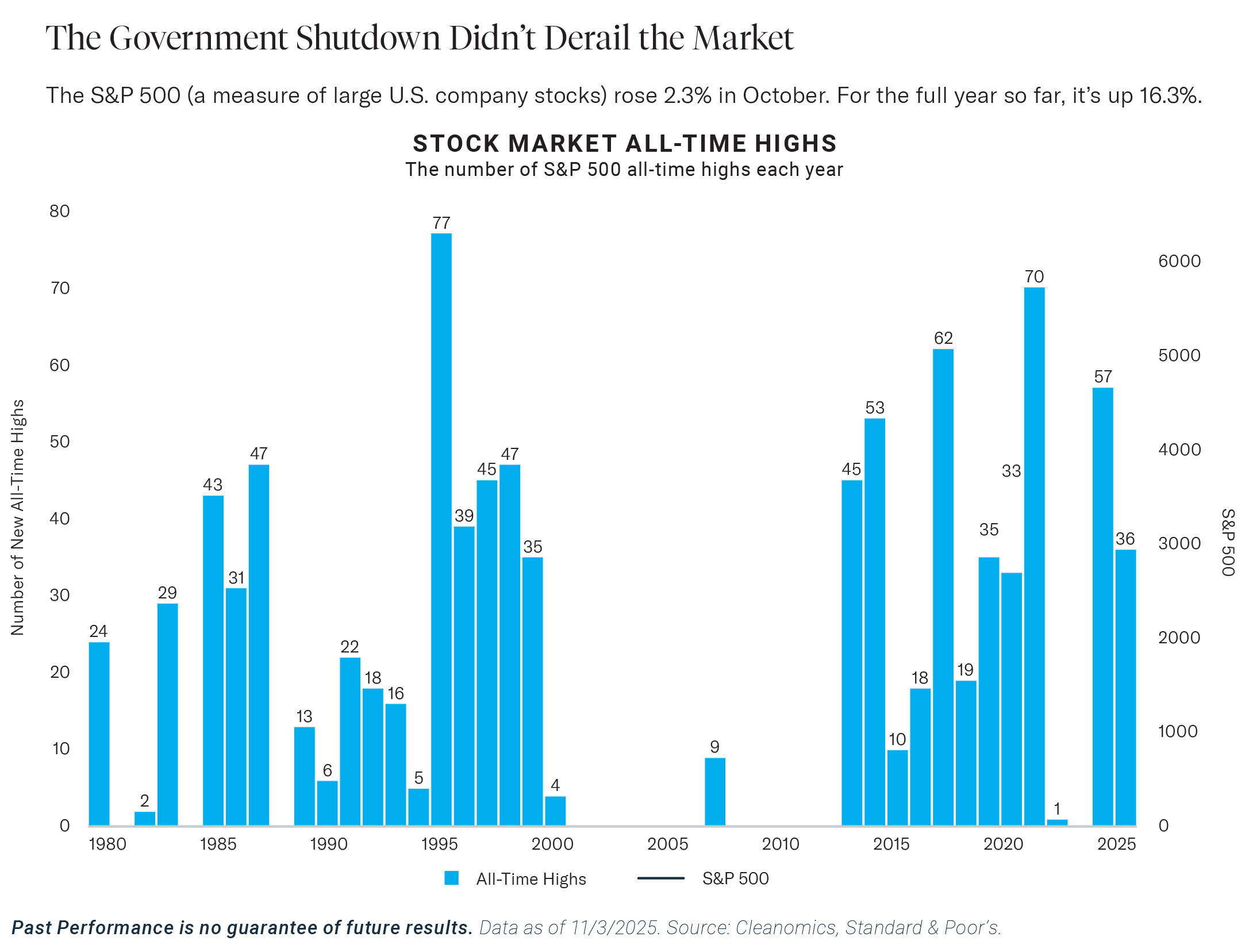
October started with a government shutdown, which happens when Congress can't agree on a budget. Many government agencies have been operating at minimal levels since then, and some economic reports have been delayed.
While shutdowns create real problems for federal workers, they usually have not had lasting effects on the stock market. Government spending is typically just delayed, not canceled. During the longest previous shutdown in 2018-2019, the S&P 500 went on to gain 31.5% the following year. This doesn't guarantee the same thing will happen now, but it shows that markets often move past these events.
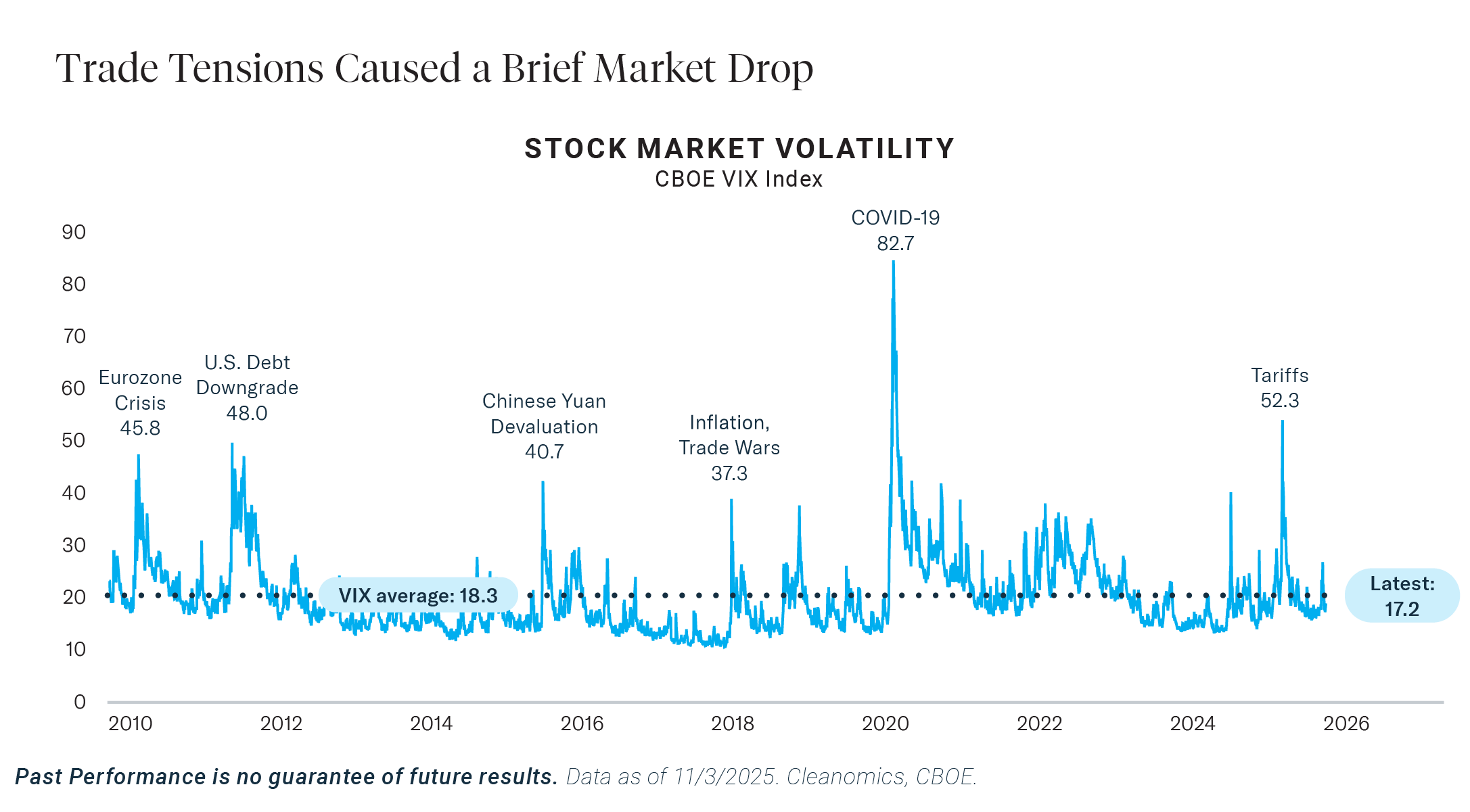
The market also had its biggest one-day market drop since April because of rising tensions between the U.S. and China over rare earth metals (special materials used in electronics and other products). China controls about 70% of global production of these materials, giving them significant power in trade discussions.
Despite this selloff, markets bounced back quickly when the White House softened its language. President Trump and President Xi then met near the end of October, which helped calm things down and led to a 10% reduction in tariffs on Chinese goods.
This pattern has happened several times this year—trade concerns cause temporary drops, then markets recover. The S&P 500 has risen 37% from its low point in April and has hit 36 new record highs this year through October. Remember that markets never go straight up, so short periods of volatility (ups and downs) are normal.
|
The Fed Keeps Lowering Interest Rates In October, the Federal Reserve lowered interest rates by 0.25% to a range of 3.75% to 4.00%. This was the second month in a row of rate cuts. The Fed is trying to support economic growth while managing inflation (rising prices) and a weakening job market. Experts expect the Fed will likely cut rates again by January, with one or two more cuts possible in 2026. The Fed also said it would stop shrinking its balance sheet (basically, it will stop selling bonds it owns). For investors, falling interest rates have historically created opportunities across different types of investments. |
 |
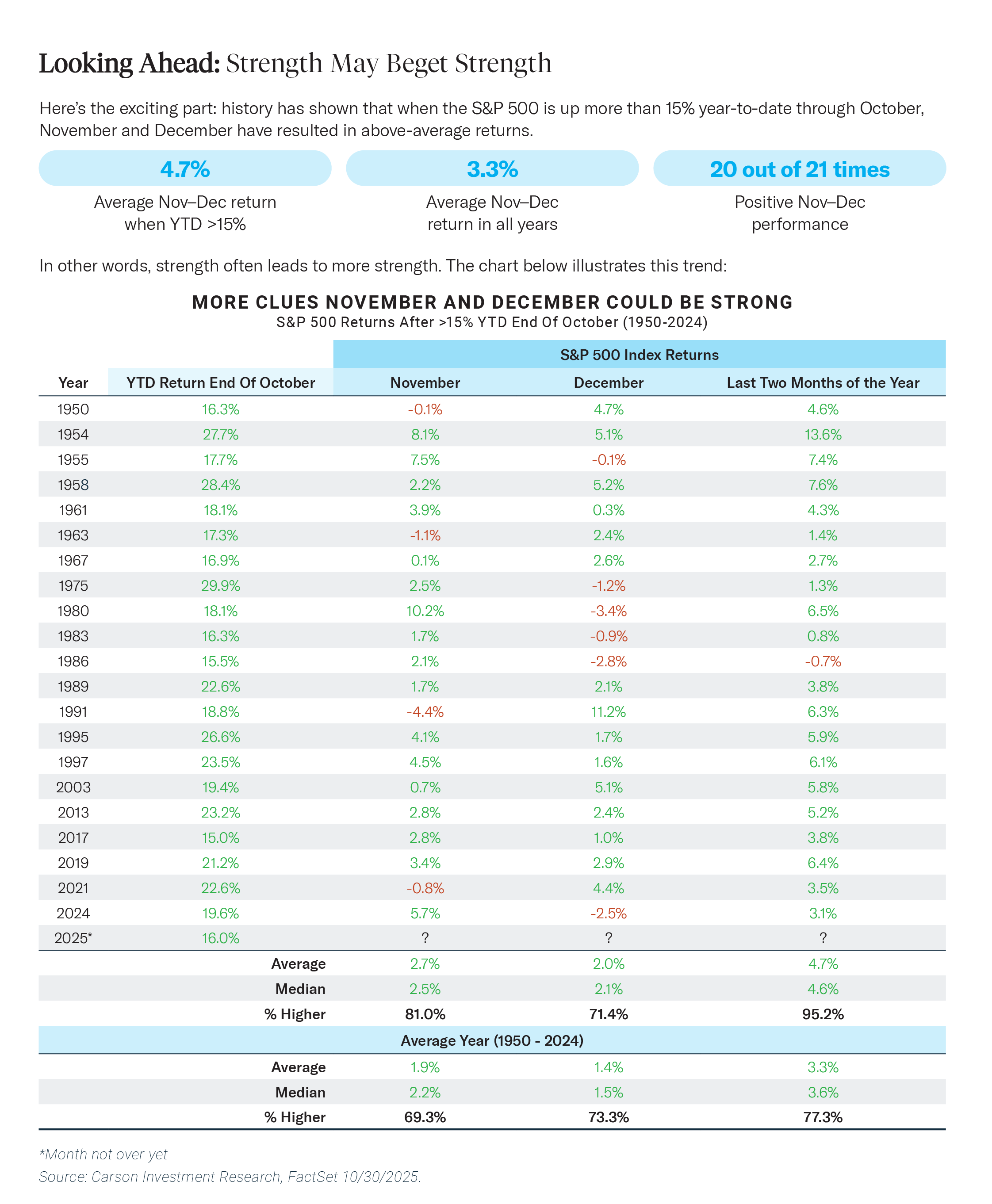
While past performance doesn’t guarantee future results, history shows that strong years have finished even stronger. Staying invested and disciplined could pay off as we head into year-end. |
|
The Bottom Line? Despite political and economic noise, markets have shown resilience. With historical trends pointing to potential strength in November and December, we believe maintaining a well-diversified, long-term strategy remains the best approach. |
All indexes are unmanaged and it’s not possible to invest directly in an index. The S&P 500 Total Return Index is a market-capitalization weighted index of the 500 largest U.S. publicly traded companies. CBOE Volatility Index (VIX) is a measure of implied volatility, based on the prices of a basket of S&P 500 Index options with 30 days to expiration.
Carefully consider the Fund’s investment objectives, risks, charges, and expenses before investing. This and other information can be found in the Fund’s statutory and summary prospectuses, which may be obtained at AmplifyETFs.com. Read the prospectus carefully before investing.
Investing involves risk, including the possible loss of principal. Shares of any ETF are bought and sold at market price (not NAV), may trade at a discount or premium to NAV and are not individually redeemed from the Fund. Brokerage commissions will reduce returns.
Amplify ETFs are distributed by Foreside Fund Services, LLC.